
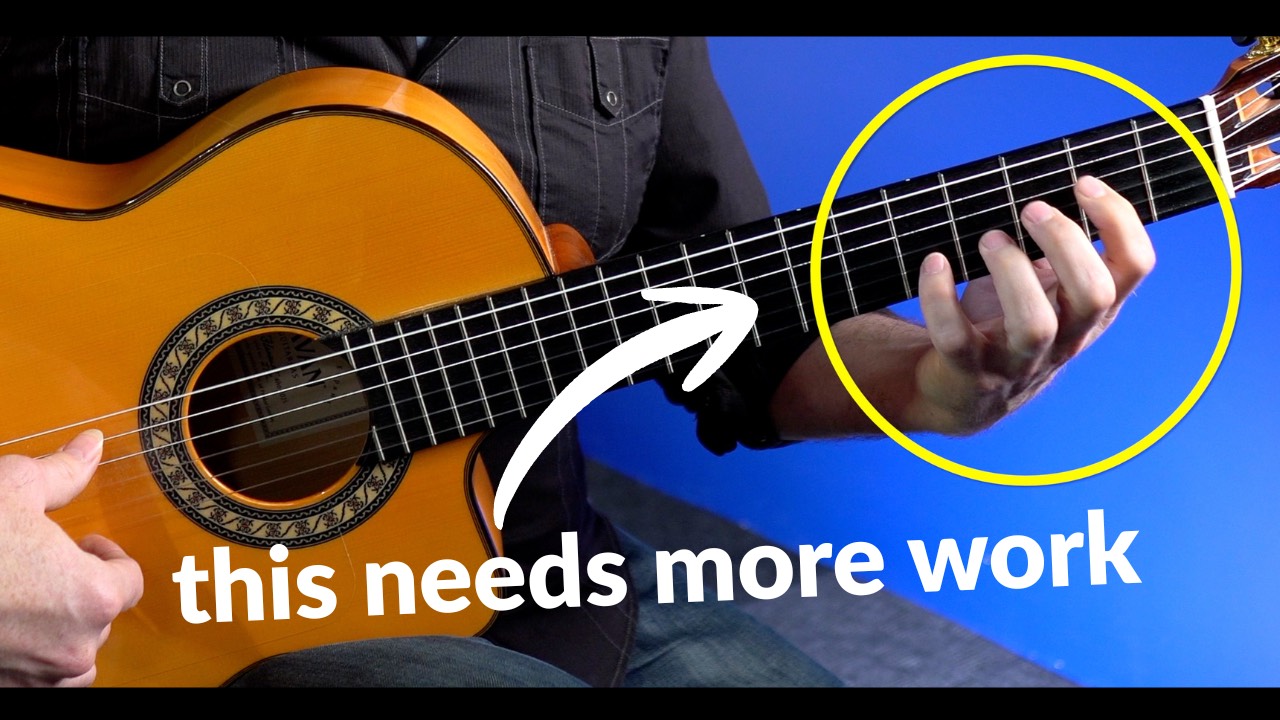
Mastering Pull-Offs on Nylon String Guitar (A Powerful Left-Hand Exercise)
Apr 07, 2026One of the most overlooked—but essential—techniques on the guitar is the pull-off.
At first glance, it seems simple. But once you move beyond pulling off to an open string and start working between fretted notes, things get much more challenging.
In this lesson, I want to walk you through a musical exercise that develops:
- Left-hand strength
- Finger independence
- Speed and control
- Coordination between hammer-ons and pull-offs
And we’ll do it in a way that actually sounds like music.
Why Pull-Offs Are So Difficult
Pull-offs to open strings are relatively easy.
But when you’re pulling off from one fretted note to another, a few problems show up:
- The fingers involved (especially pinky and ring) are weaker
- The string tends to get pulled out of position
- You can accidentally bend the string downward
So instead of just “lifting” the finger, you actually need a controlled downward pluck—while keeping the string stable.
One helpful concept: think of the other finger as anchoring the string in place
The Core Exercise (Key of A Minor)
We’ll start in A minor using a chord shape that includes an added color tone.
Step 1: A Minor Add9 Shape
You’ll begin with an A minor chord that includes the B (9th) on the second string:

Step 2: Move to an E7-Type Shape
Instead of jumping to a full E7, we use a compact diminished-style voicing that keeps the hand in position:

The Rhythm
This exercise is built around:
👉 Triplets (groups of three)
You’ll play:
- A series of hammer-ons
- Followed by a strum
- Then move immediately to the next shape
Think:
1–2–3, 1–2–3, 1–2–3, 1–2–3
The Real Challenge: Descending Slurs
Once you reverse the pattern, the real work begins.
Now you’re performing consecutive pull-offs between fretted notes
This is where:
- Finger independence is tested
- String control becomes critical
- Your pinky starts to reveal its weaknesses
A Quick Tip About the Pinky
Your pinky is a bellwether for your technique.
If it’s:
- Flying away from the fretboard
- Not staying close to the strings
…it’s going to limit your control and speed.
Keep it relaxed and close to the action
Putting It All Together
When played slowly and cleanly, this exercise becomes:
- A coordination builder
- A strength exercise
- A musical phrase
Take your time with it. Clarity matters more than speed.
Take It Further: Move to E Minor
To deepen the exercise, try the same idea in E minor.
- Use an E minor add9 (F# as the 9th)
- Move to a B7 over F# shape
Now you’ll encounter a new challenge: you’ll need to shift position and repeat notes with different fingers
This adds:
- More coordination
- More left-hand awareness
- A deeper connection between technique and theory
Why This Exercise Works
Even if you’re not actively using slurs in your playing, this kind of work will:
- Increase your left-hand speed
- Improve finger strength and control
- Clean up your articulation
- Make everything feel easier over time
Final Thoughts
Exercises like this are most powerful when they combine: technique + musical context + theory
That’s where real progress happens. Pull-offs are really a great way to develop left-hand dexterity but there's many beneficial exercises you can do for the left hand. Watch the full tutorial here:

